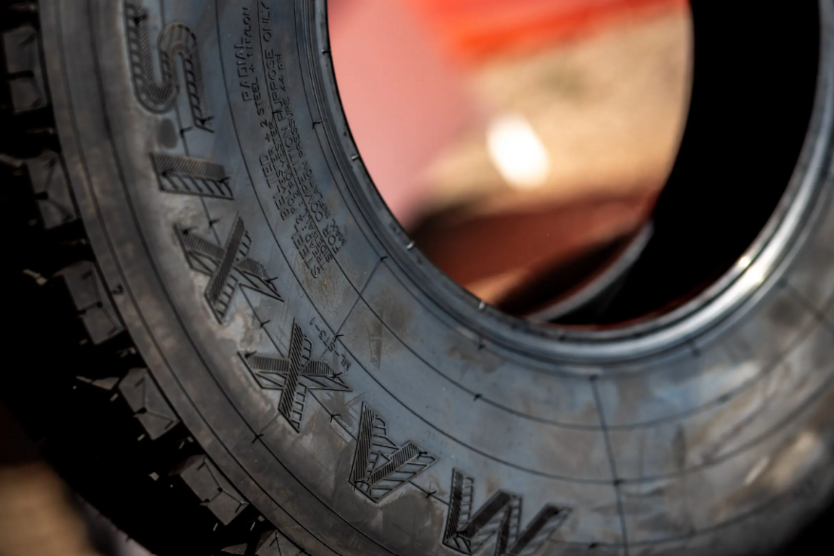
How OEM Requirements Influence Tire Compound and Construction

When picking between summer, winter, and all-season tires, there’s more to consider than just the tread pattern or the tire labeling. The primary differentiator is how each tire type responds to temperature variations.These classifications are not only marketing terms. They indicate the specific material formulations and performance characteristics of the tire operating in different weather conditions like heat, cold and everything in between.


A tire is built much like following a recipe. Engineers formulate tire compounds using precise blends of rubber, silica and other materials such as reinforcement materials, to regulate elements like heat dissipation and frictional behavior. Things like vehicle weight, braking, rolling resistance, grip on wet roads, and durability all shape how the compound is made.


Car makers also have a big say in how your tires are designed. They set strict goals for handling, braking, and efficiency. Because rubber changes with temperature, engineers create different tires for each season to meet these standards all year round.
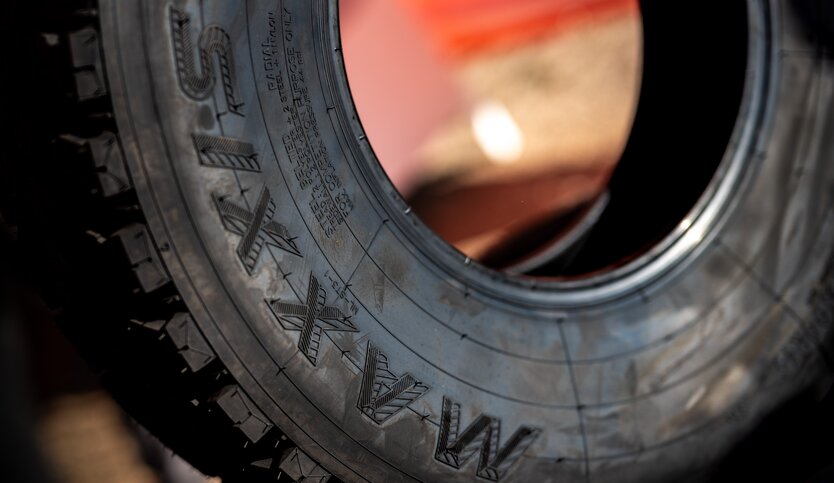
 

Switching to summer tires isn’t just about the date on the calendar. Picking the right winter tire is more than just checking the label. What matters is whether your tire was made to meet your car maker’s standards. This helps you drive faster, stay stable, and save on costs and fuel, no matter which type you use.

Why Tires Are Engineered Differently for Each Season

You might not see how heat changes rubber, but you can feel it. In hot weather, rubber gets softer. In the cold, it stays hard.That’s why no single tire type works on both ends of the spectrum.


Of course, a tire is much more than just rubber. It’s a mix of materials designed for speed, stability, fuel efficiency, braking, grip, and more. But temperature has a big impact on how these materials work on the road.


Cold temperatures increase stiffness
When it gets colder, the rubber stiffens. This makes it harder for the tire to grip the road, which can mean longer braking distances and less stability, especially when driving fast.


Warm temperatures soften compounds
Warmer temperatures make the tire more flexible. This gives better grip, but if the tire gets too soft, it wears out faster.


For example, summer tires like the Maxxis Premitra HP6 stay firm enough for sharp steering, stable turns, and steady braking on wet roads, without wearing out too quickly. 

The tire tread also plays a significant role in stability. In this tire, for example, the inner grooves are wider to help channel water away with the help of the optimized shoulder design. As a result, the tire offers enhanced stability on wet and even slightly flooded roads. 

But when it gets colder, the tire stiffens, the tread can’t grip the road the same way, and traction drops.


Winter tires use a different approach. The rubber in models like the Maxxis Premitra Snow WP6 stays flexible in the cold. This helps the tread keep contact with cold roads, snow, and slush.

The tread pattern itself plays a huge role in the car’s stability on snow and ice. The designs are purposefully made to allow better grip on snow-covered roads and slippery surfaces.

But in hot weather, the tire gets too soft, which can lower stability, reduce fuel efficiency, and cause faster wear.


All-season tires balance these behaviors. Their compounds remain moderately flexible across a broader temperature range. It improves usability in rapidly changing conditions, but specialized summer and winter tires outperform it in extreme conditions.

graph for rubber flexibility vs temperature for winter, summer and all-season tires

Compound Chemistry: The Science Behind Seasonal Grip

Every tire is made from a careful mix of ingredients. Each part affects how the tire handles heat, pressure, and friction. The way these are balanced decides if a tire works best in summer, winter, or all year round.

Rubber itself forms the foundation of every tire compound. Tire compounds are formulated using natural rubber with synthetic polymers and reinforcing additives to achieve specific mechanical properties. These materials influence flexibility, structural strength and resistance to heat or abrasion.

The tire anatomy starts with:

  • Carcass
  • Belt
  • Cap Ply
  • Tread Compound


followed by outer materials:

  • Tread Compound
  • Tread
  • Inner Liner
  • Sidewall


Even a small change in the mix can make a big difference in how a tire performs on the road.


CompoundEffect on Tire Performance
Natural RubberIncreases elasticity and flexibility, helping the tread adapt to uneven road surfaces
Synthetic rubber polymersImprove durability and allow engineers to control how the compound reacts to heat
SilicaEnhances wet grip and can reduce rolling resistance
Carbon blackReinforces the compound structure and improves resistance to wear
Chemical stabilizers and additivesHelp compounds tolerate heat, aging, and mechanical stress


These ingredients don’t work alone. More silica helps with grip on wet roads, but too much flexibility can wear the tire out faster. Adding carbon black improves structural strength and wear resistance but can reduce flexibility, particularly in colder conditions. Engineers have to balance all these factors to achieve the right performance.
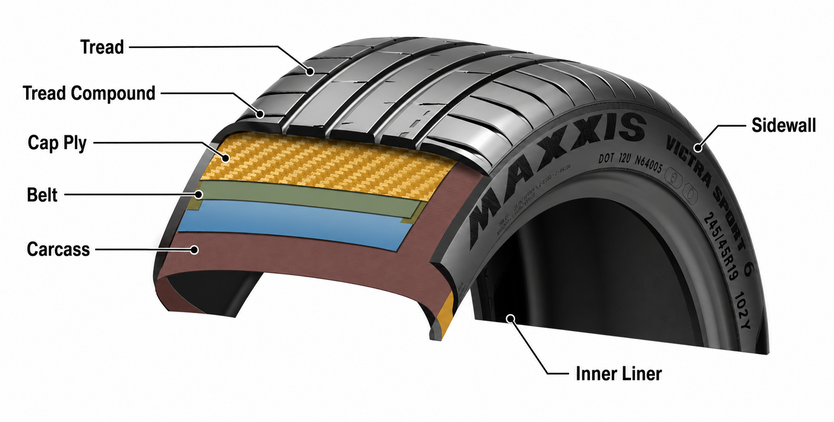
tire construction anatomy

How Summer Tire Compounds Prioritize Stability and Efficiency


Hot roads make tires more flexible. If the tire gets too soft, you lose steering control and braking power. That’s why summer tires are made to be tough and heat resistant, so they stay stable when driving fast or braking hard.
Engineers do this by using:

  • Higher carbon black content to strengthen the compound and improve resistance to wear under heat and load
  • Heat-stable synthetic polymers to maintain structural stability during sustained friction and high-speed driving.
  • Moderate silica levels to improve wet grip without overly softening the compound
  • Lower natural rubber proportion to limit excessive flexibility that could reduce handling precision.


This mix helps summer tires stay stable, brake well, and roll smoothly in warm weather.


Why Winter Tire Compounds Stay Flexible in Cold Temperatures


Cold weather changes how rubber reacts and performs. That’s why winter tires are made to be more flexible. Engineers tweak the mix in a few ways to keep good grip when it’s cold.

  • Higher natural rubber content to improve elasticity and keep the tread flexible in freezing conditions.
  • High silica concentration to enhance grip on wet pavement, snow, and icy surfaces.
  • Reduced carbon black reinforcement to prevent the compound from becoming too rigid at low temperatures.
  • Flexible polymer blends to allow the tread to conform to irregular surfaces and maintain traction.
     

This special mix helps winter tires keep their grip and braking ability when it gets really cold.


How All-Season Tire Compounds Balance Competing Performance Needs


All-season tires need to work in a wide range of temperatures. Engineers blend features from both summer and winter tires to keep them flexible enough without wearing out too quickly.

Getting the right mix of materials is important here.

  • Balanced polymer blends to provide durability while maintaining moderate elasticity.

  • Moderate silica content to support wet grip and help control rolling resistance.

  • Controlled natural rubber levels to maintain flexibility during cooler weather without excessive softness in warm conditions.

  • Reinforcing additives to preserve stability and tread durability during summer driving.


This balanced design lets all-season tires work in changing weather, but they can’t match the top performance of summer or winter tires in extreme conditions.


How Tire Structure Changes Between Seasons


Many drivers focus on tread patterns when they compare tires. The visible grooves often get the credit for traction and handling. The tire's internal structure, however, plays an even more important role. Beneath the tread, multiple structural layers control how the tire carries load, absorbs forces, and maintains stability at speed.


Several construction features influence how a tire behaves on the road:
 

  • Steel belt reinforcement

    Controls tread stability and helps the tire maintain its shape during high-speed driving and heavy braking.

  • Carcass stiffness

    Determines how much the tire flexes under load and how efficiently it distributes vehicle weight.

  • Tread block geometry

    Affects handling precision, traction, and braking behavior.

  • Siping density

    Small cuts in the tread improve traction on snow, ice, and wet pavement.

The materials and the structure of a tire always work together. The compound affects grip and how the tire handles heat. The structure decides how it carries weight and stays stable. Engineers adjust both to make sure the tire works well in real driving.


For example, the all-season, off-road-first Maxxis Razr Raid+ uses a reinforced carcass and optimized cord structure to improve durability and stability in demanding environments. Large tread blocks support traction on sand, rock, and hard-packed surfaces, while the compound maintains grip across mixed conditions. The result is a tire engineered to handle high loads and unpredictable terrain without sacrificing control.


CharacteristicSummer TireAll-Season TireWinter Tire
Optimal TemperatureAbove ~7°CModerate temperature rangeBelow ~7°C
Compound TypeFirm compound for stabilityBalanced compoundFlexible compound for cold grip
Tread DesignWide Grooves for wet gripHybrid tread patternDeep grooves and sipes for snow
Performance StrengthDry and wet handlingBalances year-round usabilitySnow and ice traction
Typical Use CaseWarm climate drivingMixed conditionsWinter and cold climates

How OEM Development Standards Shape Tire Performance

Most people pick tires by size, season, or price. But many tires are actually developed alongside the cars they’ll be used on. Car makers set strict goals for how the tires should perform, even before they reach stores. Tire engineers then design the materials and structure to help cars meet these goals in real driving.


Several performance areas guide this development process:
 

  • Braking performance
    Tires must deliver predictable stopping distances on both dry and wet surfaces.
  • Handling stability
    The tire must support steering precision and maintain control during cornering.
  • Rolling resistance
    Lower resistance improves vehicle efficiency and fuel consumption.
  • Noise and comfort
    Modern vehicles require tires that reduce vibration and road noise.
  • Durability and load tolerance
    The tire must maintain structural integrity under sustained loads and varying road conditions.
     

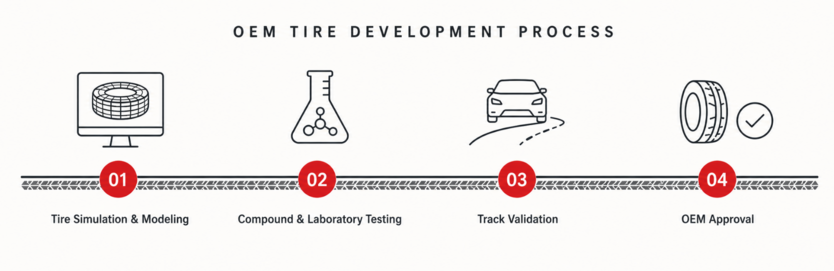
Tire development often starts with computer models. Engineers test how the materials and structure will handle weight, heat, and friction in a virtual environment. Next, they run lab tests to check stress, temperature, and durability. After that, they test the tires on tracks to measure braking, handling, and stability in real situations. Only tires that pass all these steps get approved by car makers.

Car brands work closely with tire makers during development. Brands focused on performance, like BMW, set high standards for precision and stability at high speeds. Tire engineers then adjust the materials, reinforcement, and tread to meet these needs.
When to Change Tires

Most European countries have strict regulations surrounding tire changes.


CountryMandatory?Dates / triggerNotes
AlbaniaNo general national requirement

Winter tires are still highly recommended in the mountains.

AndorraYes

1 Nov - 15 May 

Either have winter tires or carry snow chains

AustriaConditional mandatory

1 Nov – 15 Apr, but only if weather conditions require it

Winter tires required on all wheels in snow/ice.

BelarusYes

1 Dec - 1 Mar

Winter tires with 4mm tread depth on all 4 wheels

BelgiumNo general national requirementNo national winter-tire mandate.
Bosnia and HerzegovinaYes

15 Nov - 15 Apr

All-season tires with the 3PMSF marking are acceptable.

BulgariaYes

15 Nov – 1 Mar

Winter/ all-season tires, or even summer tires, may be used if tread depth is at least 4 mm.

CroatiaYes

15 Nov – 15 Apr

Winter tires and additional winter equipment required.
CyprusNo general national requirement

On days with snow or ice, only 4x4 vehicles or vehicles equipped with snow chains are allowed past specific points.

Czech RepublicConditional mandatory

1 Nov – 31 Mar, if snow, ice, or likely icy conditions are present

Weather-linked within a fixed season.
DenmarkConditional mandatory

No fixed nationwide dates stated; suitable tires required in winter conditions

Since July 2025 law, winter or all-season tires with snowflake marking are required in snow, ice, slush, or frost.
EstoniaYes

1 Dec – 1 Mar

Studded tires allowed 15 Oct – 31 Mar in winter conditions.

FinlandConditional mandatory

1 Nov – 31 Mar, if weather or road conditions require it

Weather-linked within a fixed season.
FranceConditional mandatory

1 Nov – 31 Mar in designated mountain areas

Applies in specified mountain departments/areas, not nationwide.
GermanyConditional mandatory

No fixed dates; mandatory in ice, packed snow, slush, glaze ice, or slippery frost

Weather-triggered rule.
GreeceConditional mandatory

No blanket fixed dates; anti-slip equipment may be required Oct – Apr when ordered

Can include winter tires, all-season tires, chains, or socks depending on the order.
HungaryNo general national requirementChains may be required in signed areas.
Iceland

Not nation wide, but on many roads

1 Nov - 15 Apr

Winter or all-season tires with 3mm+ tread during winter conditions

IrelandNo general national requirementNo national winter-tire mandate.
ItalyConditional mandatory

Usually 15 Nov – 15 Apr on roads with winter-equipment signs

Sign- and road-based, not a blanket national rule.
KosovoYes

15 Nov - 15 Mar

Winter tires on all wheels or show chains for summer tires

LatviaYes

1 Dec – 1 Mar

Tires must have the "three-peak mountain snowflake" (3PMSF/Alpine) symbol and 4mm+ tread depth

LiechtensteinNo general national requirementNo general national requirement in the Europe-wide source.
LithuaniaYes

10 Nov – 1 Apr

Winter or universal tires allowed.
LuxembourgConditional mandatory

No fixed dates; mandatory in winter weather

Applies in black ice, snow, slush, ice sheets, or frost.
MaltaNo general national requirementNo national winter-tire mandate.
MoldovaConditional mandatory

1 Dec - 1 Mar when there are winter conditions

Mandatory winter tires when there is a consistent layer of snow, ice or frost on the road

MonacoNo general national requirementNo national winter-tire mandate.
MontenegroYes

1 Nov - 1 Apr

Winter Tires on all wheels are required in winter conditions on all roads or throughout the entire period on specific roads

NetherlandsNo general national requirementNo national winter-tire mandate.
North MacedoniaYes

15 Nov - 15 Mar

winter tires on all four wheels with a minimum tread depth of 4 mm, or summer tires with a 4 mm minimum tread depth and snow chains

NorwayConditional mandatory in practiceNo blanket fixed dates for passenger cars; tires must be suitable for conditionsIn practice, winter tires are expected in winter driving.
PolandNo general national requirementWinter or all-season tires are recommended, but not nationally mandatory.
PortugalNo general national requirementChains may be required by sign.
RomaniaConditional mandatory

No fixed dates; mandatory on roads covered by snow, ice, or black ice

Weather-triggered rule.
San Marino

Conditional / road-based

15 Nov - 15 Apr

Similar to Italian regulations

SerbiaConditional mandatory

1 Nov - 1 Apr if there is snow, ice or forst.

If the roads are dry, summer tires are acceptable.

SlovakiaConditional mandatory

15 Nov – 31 Mar, if roads are covered with snow, ice, or frost

Weather-linked within a fixed season.
SloveniaYes

15 Nov – 15 Mar

Also required outside that period in actual winter weather.
SpainConditional mandatoryNo blanket national dates; winter tires or chains required where road signs/order say soStudded tires allowed in a winter period, but the main passenger-car rule is sign-based.
SwedenYes

1 Dec – 31 Mar

Passenger cars must use winter tires or equivalent equipment.
SwitzerlandNo general national requirementNo blanket national mandate, though winter tires are strongly advised.
UkraineNo general national requirementNo national winter-tire mandate in the Europe-wide source.
United KingdomNo general national requirementWinter tires are recommended, not mandatory nationally.


While many of these regulations follow calendar-based periods, tire engineers and safety organizations typically focus on temperature conditions. Most recommend switching tires when thermometers approach 7°C.


This temperature isn’t a hard rule. It’s a practical guide based on how tires work in Europe. Air temperature is used because it’s easy to check, even though roads can be warmer or cooler. The 7°C mark just gives drivers a simple way to know when to change tires without checking the road itself.


Why All-Season Tires Exist: Engineering a Balanced Performance Window

Not everyone faces harsh winters or very hot summers. Many places in Europe have mild weather, where temperatures change but don’t stay far above or below 7°C for long. Areas like the Netherlands, Belgium, the UK, northern France, coastal Germany, and northern Italy often have mild winters and summers. Drivers there deal with mixed conditions instead of long periods of extreme weather.


So, Instead of making tires just for heat or snow, engineers balance flexibility and stability so the tire works well all year. This way, the tire can handle changing temperatures without needing to be swapped out each season.


All-season tires are like all-weather hiking shoes. They work well in many conditions, but they can’t beat gear made for just one type of weather. Summer tires still handle better in heat, and winter tires grip better on snow and ice.

A tire such as the MAXXIS Premitra AS AP3 SUV demonstrates how engineers approach this balance. Its compound and tread design support stable handling in warm conditions while maintaining traction when temperatures drop.
 

Why Tire Engineering Matters More Than the Season on the Calendar

The calendar rarely reflects real driving conditions. A December morning in northern Italy can feel closer to autumn, while early spring in Sweden may still bring freezing roads. Tire engineers understand this well, which is why tire development focuses on operating conditions rather than seasons.


Car makers use the same thinking when developing vehicles. When they approve a tire, they check braking, durability, noise, and efficiency at certain temperatures. Seasonal tire types just show where these designs work best. Tire makers work with car brands to make sure their tires perform well in those conditions.

That’s why it’s more important to match your tire to the weather than to the calendar. Rules often use set dates, but real road conditions don’t. Even if you’re allowed to switch early, putting on summer tires too soon can hurt stability, braking, and fuel efficiency if it’s still cold.


Maxxis uses this same approach when designing tires. Each tire is made to work best within certain temperatures and performance needs, so drivers and dealers can pick the right tire for the conditions.

Explore Tires Engineered for Real Driving Conditions

Discover the full range of Maxxis car tires designed to deliver reliability, performance, and confidence on every journey.

Explore Maxxis Car Tires